TREEO Career Center
Discover Where Your Training Can Take You
Whether you’re just starting out or leveling up, TREEO’s hands-on training opens doors to in-demand careers across Florida and beyond. Our programs are aligned with industry standards and lead directly to job titles, salary potential, and pathways that matter.
Explore your path below to see how each TREEO program connects to real-world careers.

Asbestos Industry Career Insights
Get Certified and Step Into an In-Demand Trade
Knowledge of asbestos maintenance and removal is a key part of keeping buildings safe. With a short course and your certification, you can work on real job sites and earn great pay—no college degree required.
Careers You Might Consider
Asbestos Training can be a step towards jobs such as:
Hazmat Technician (Hazardous Materials Technician) Asbestos Abatement Worker Hazard Waste Handler Building or Engineering Inspector Environmental Analyst or Specialist Industrial Hygienist (CIH) Environmental Health & Safety Officer Safety Specialist or Consultant
These roles are typically found in environmental safety, industrial compliance, or construction safety fields.
Average Salary Ranges
Hazardous Materials Removal Workers:
Environmental Scientists and Specialists, Including Health:
Construction and Building Inspectors:
Occupational Health and Safety Specialists:
*Sourced from Lightcast, period Jan 2024 – Dec. 2024
Skills & Knowledge Employers Want
Safety & Health Hazards Knowledge
Environmental Regulations
Analytical & Problem-Solving Skills
Communication Skills
*These roles often involve technical expertise and compliance knowledge, ideal for detail-oriented learners.
Is This a Good Fit for You?
This career might be a great match if you:
Enjoy solving problems under pressure
Have physical stamina and attention to detail
Are comfortable in hazardous or regulated environments
Communicate clearly and work well on a team
Backflow Industry Career Insights
Protect Clean Water — Start a Career With Purpose
Backflow technicians play a key role in keeping drinking water safe. With a few targeted courses, you’ll learn how to test and repair systems that protect our water supply—no college needed.
Careers You Might Consider
Backflow Training can be a step towards jobs such as:
Backflow Technician Plumber / Plumbing Technician Sprinkler Fitter Pipefitter / Steamfitter Water Treatment Plant Operator Wastewater Treatment Plant Operator Wastewater Operator (WW Operator) Water Plant Operator Plant Operator (in water/wastewater systems)
Average Salary Ranges
Backflow Technician:
*Sourced from Lightcast, period Jan 2024 – Dec. 2024
Skills & Knowledge Employers Want
Backflow Prevention Methods Knowledge
Equipment Operation and Maintenance
Plumbing Codes and Regulations
Hazard Identification and Risk Assessment
Strong Problem-Solving Skills
Effective Communication and Customer Service
Is This a Good Fit for You?
This career might be a great match if you:
Attention to detail
Technical aptitude for operating tools
Strong interpersonal skills
Ability to work independently
Commitment to safety practices
Safety & Health (OSHA-Aligned) Industry Career Insights
Be the Safety Leader on Any Job Site
Every job site needs someone who knows the rules and keeps people safe. That could be you. With OSHA training, you’ll be ready to work in construction, manufacturing, or any industry where safety comes first.
Careers You Might Consider
Health and Safety Training can be a step towards jobs such as:
Occupational Health and Safety Specialist Industrial Hygienist Safety Specialist Safety Officer Certified Industrial Hygienist (CIH) Safety Management Consultant Safety Consultant Industrial Hygienist Consultant EHS Officer Environmental Health and Safety Officer
Average Salary Ranges
Occupational Health and Safety Specialists:
*Sourced from Lightcast, period Jan 2024 – Dec. 2024
Skills & Knowledge Employers Want
Safety and Health Hazards Knowledge
First aid and CPR Certifications
Problem-Solving Skills
Communication Skills
Management/leadership Skills
Observant
Is This a Good Fit for You?
This career might be a great match if you:
Strong safety mindset
Problem-solving skills
Good interpersonal skills
Adaptability to changing situations
Solid Waste Industry Career Insights
Turn Safety Skills Into a Solid Career
From cleanup crews to environmental fieldwork, this area is perfect for people who want a hands-on job that makes a real difference. With safety training under your belt, you’ll be ready to step into jobs that protect people and the environment.
Careers You Might Consider
Solid Waste Training can be a step towards jobs such as:
Solid Waste Operator Landfill Operator Transfer Station Operator Solid Waste Manager Solid Waste Collection Operator Heavy Equipment Operator Scale House Attendant
Skills & Knowledge Employers Want
Landfill Operations Methods Knowledge
Equipment Operation and Maintenance
Safety Precautions for Tools and Equipment
Operation of Complex Construction Equipment
Traffic Management Techniques
Proper Use of Personal Protective Equipment (PPE)
Is This a Good Fit for You?
This career might be a great match if you:
Strong interpersonal and communication skills
Attention to detail
Commitment to safety practices
Ability to work in various environmental conditions
Problem-solving skills
Average Salary Ranges
Solid Waste Operator:
Landfill Operator:
Transfer Station Operator:
Solid Waste Manager:
Solid Waste Collection Operator:
Heavy Equipment Operator:
Scale House Attendant:
*Sourced from Glassdoor
Water & Wastewater Industry Career Insights
Jump Into a Career That Keeps Communities Running
Clean water is essential—and so are the people who make it happen. Water and wastewater operators help keep our systems safe and reliable. With TREEO training, you can get started in this stable, high-demand field without a four-year degree.
Careers You Might Consider
Water & Wastewater Training can be a step towards jobs such as:
Wastewater Treatment Operator Water Treatment Plant Operator
Wastewater Treatment Plant Operator Wastewater Operator (WW Operator) Plant Operator Water Operator Distribution System Operator Water Distribution System Operator Water Distribution Operators
Average Salary Ranges
Water and Wastewater Treatment Plant and System Operators:
*Sourced from Lightcast, period Jan 2024 – Dec. 2024
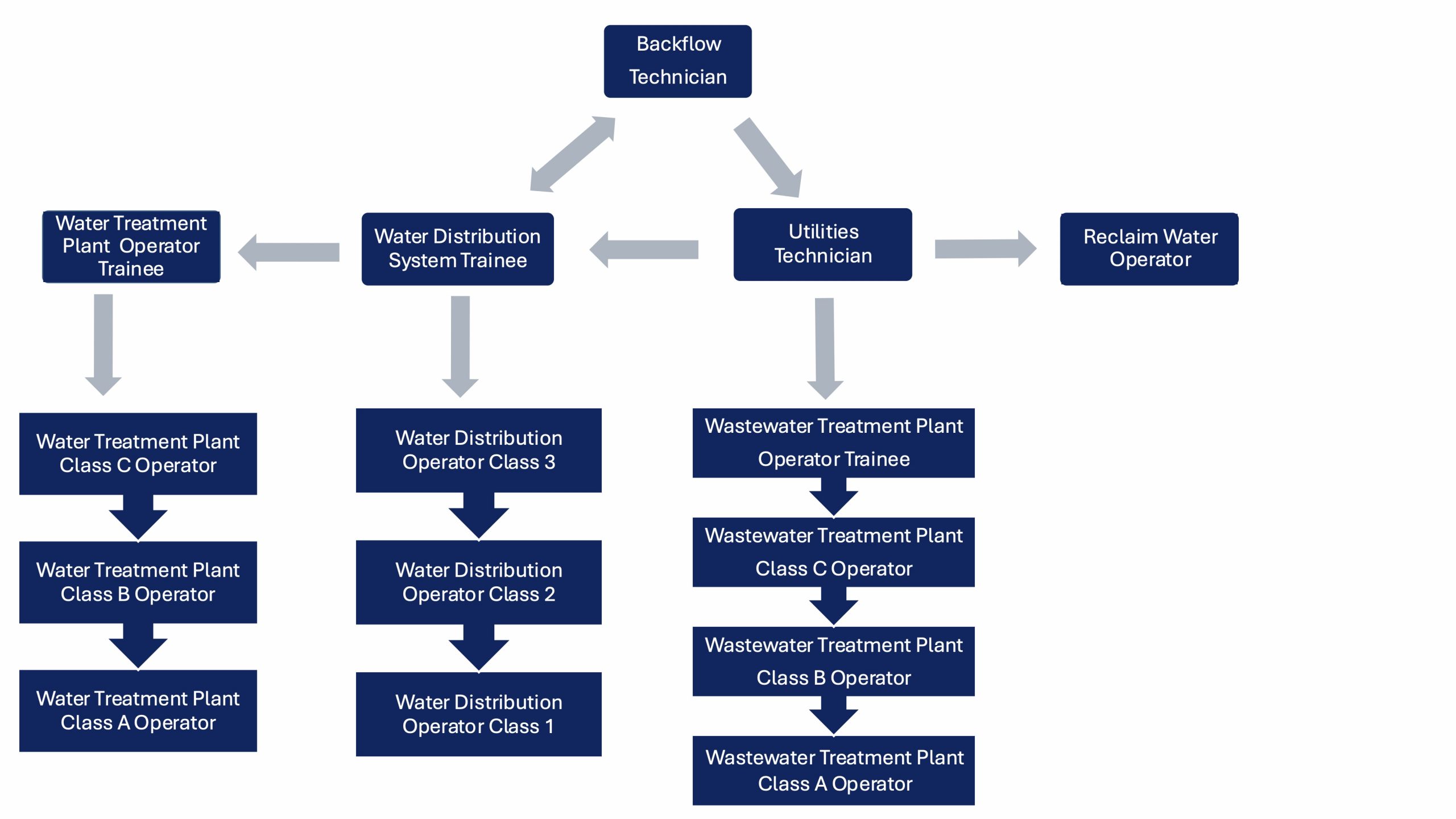
Career Growth & Potential Pathways
Most water and wastewater careers follow a path from Trainee to Class A Operator. Each step up reflects more knowledge, more responsibility—and higher pay. You can start as a Backflow Operator or Utilities Technician and grow into roles across water treatment, wastewater treatment, or water distribution.
Skills & Knowledge Employers Want
Water Quality Analysis
Equipment Maintenance and Repair
Monitoring Systems and Controls
Mathematical Calculations for Treatment Processes
Compliance with Environmental Regulations
Is This a Good Fit for You?
This career might be a great match if you have:
Analytical skills: Must conduct tests and inspections on water or wastewater and evaluate the results.
Detail oriented: Must monitor machinery, gauges, dials, and controls to ensure everything is operating properly.
Math skills: Must have the ability to apply data to formulas that determine treatment requirements, flow levels, and concentration levels.
Mechanical skills: Must know how to work with machines and use tools. They must be familiar with how to operate, repair, and maintain equipment.