

Beyond Water and Shade: What a Real Heat Illness Prevention Program Looks Like
Ask most employers if they have a heat illness prevention program, and the answer is almost always yes. Water is available, shade is provided, maybe there’s a poster in the break room reminding everyone to stay hydrated.
These are good, important first steps, but they’re just that: a starting point. A true prevention program goes further, weaving together a few key elements so that when the heat index climbs, everyone on-site already knows what to expect and what to do.
We’ve spent years working alongside employers to help them build exactly that kind of program. Here’s what it tends to include, and why each piece matters.
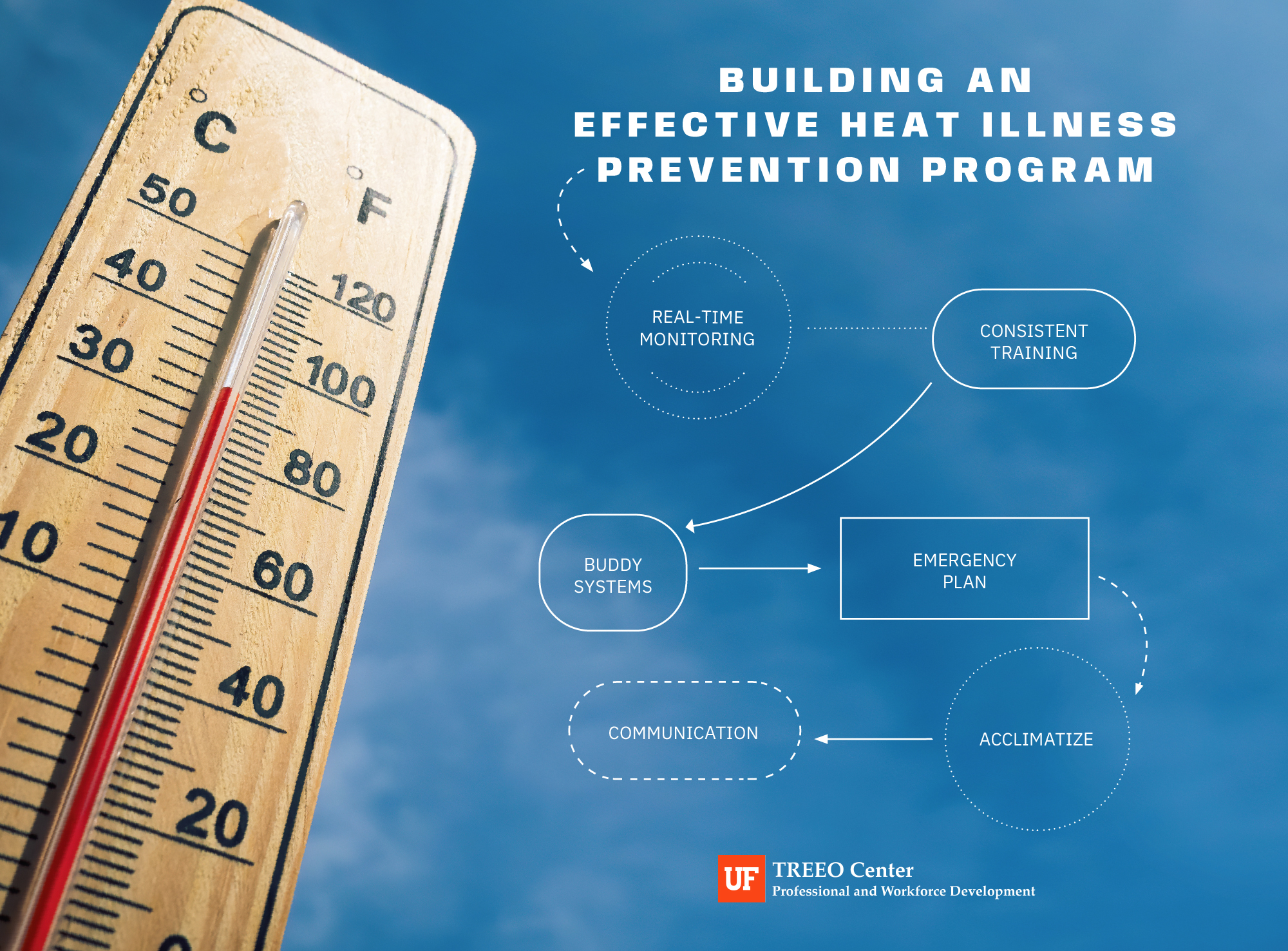
What a Real Prevention Program Includes
Real-Time Monitoring, Not Just a Morning Forecast
A quick check of the weather app before the shift starts is a helpful habit, but conditions can shift throughout the day. Programs that hold up well tend to track heat conditions continuously and pair that with clear, pre-set action levels: guidance on when to increase break frequency, when to slow the pace of physical work, and when to pause altogether.
One detail we often help employers think through is ownership: who on-site is responsible for watching conditions and making the call to move to the next step. Having a clearly designated person makes a meaningful difference in how consistently a program gets followed.
Training That Stays Fresh Through the Season
Heat safety training often happens once a year, sometimes months before it’s needed most. By the time summer peaks, the details can feel like a distant memory.
We like to encourage a bit of a different approach, treating heat education as an ongoing conversation rather than a single annual session. Short refreshers before the season ramps up, quick check-ins woven into toolbox talks, and real-world scenarios can go a long way. The goal is for workers to feel confident recognizing early signs of heat-related illness, both in themselves and in the people working alongside them. That second part, noticing it in a coworker, is often what makes the biggest difference.
Buddy Systems That Actually Get Used
Buddy systems appear in almost every safety manual we come across. In practice, they don’t always get the follow-through they’re written to have.
A buddy system tends to work best when pairings are intentional, workers understand it’s genuinely their role to check in on one another, and supervisors reinforce that expectation regularly rather than assuming it happens on its own. It’s a simple structure, but it depends on everyone treating it as more than paperwork.
An Emergency Response Plan, Ready Before It’s Needed
When someone begins showing signs of serious heat-related illness, the first few minutes matter a great deal. Programs that are ready for this moment have already answered the key questions: who calls it, what cooling measures begin right away, and what the next steps look like.
This is also a good opportunity to think through coordination with local emergency services ahead of time. Understanding response expectations and having that conversation before an emergency happens, rather than during one, can make a real difference.
Communication That Flows Both Ways
A strong program depends on communication that moves in both directions throughout the day. That means conditions and any changes to action levels are shared clearly and often, not just posted once at the start of a shift, and it means supervisors feel accountable for passing that information along consistently.
Acclimatization Schedules for New and Returning Workers
New hires and workers coming back from time away are consistently among the most vulnerable to heat-related illness, regardless of how experienced they are in the work itself. Their bodies simply haven’t had the chance yet to adjust to working in the heat.
Building in a gradual acclimatization period, often over one to two weeks, is a small structural addition that can meaningfully lower risk for this group.
Building Something More Than the Minimum
The employers who build the strongest heat illness prevention programs aren’t necessarily the ones with the longest manual. They’re the ones whose monitoring, training, buddy systems, emergency response planning, acclimatization practices, and communication all work together as one connected system, with everyone on-site understanding their part in it.
If you’re interested in building a program like this for your organization, TREEO’s heat-related safety and health courses are designed to help you do exactly that. Explore TREEO’s Safety & Health course offerings to see how we can support your team with the training and structure a strong prevention program depends on.